Understanding Brownsville's Humidity Challenge
Living in Brownsville means dealing with one of Texas's most humid climates. The Rio Grande Valley experiences moisture levels that can exceed 80% during much of the year, especially in spring and summer months. This isn't just uncomfortable for residents; it creates a serious challenge for home insulation systems. When warm, moisture-laden air encounters cooler surfaces in your attic, condensation forms. Over time, this moisture infiltration can compromise traditional fiberglass and cellulose insulation, reducing their effectiveness and creating an environment where mold and mildew thrive.
The physics behind this problem is straightforward: humid air naturally moves toward cooler, drier spaces. Your attic, even when ventilated, becomes a moisture sink because the air inside is typically cooler than the saturated air outside. This inward drive of humidity is relentless in Brownsville's subtropical climate. Traditional insulation materials absorb moisture like a sponge, losing their insulating value as water content increases. A material rated R-19 can drop to R-10 or lower when saturated, meaning your cooling costs spike while your comfort declines.
Why Traditional Insulation Fails Against Moisture
Fiberglass batts and blown-in cellulose have been the standard for decades, but they share a critical weakness: they're hygroscopic, meaning they absorb and retain moisture. In Brownsville's climate, this isn't a minor inconvenience. When these materials get wet, they stay wet. The moisture doesn't evaporate quickly because of the high ambient humidity outside, creating a damp environment inside your attic that never fully dries. This persistent moisture leads to several cascading problems: insulation degradation, structural wood rot, rust on metal fasteners and ductwork, and the proliferation of mold colonies that can spread into living spaces below.
Additionally, traditional insulation doesn't seal air leaks. Fiberglass and cellulose leave gaps around penetrations, wiring, and structural elements. These gaps allow humid air to flow freely into your attic, bypassing the insulation entirely. The result is a double failure: the insulation itself becomes waterlogged while warm, moist air continues to infiltrate unchecked. Homeowners often discover this problem only after noticing higher energy bills, musty odors, or visible mold growth. By then, the damage to both the insulation and the attic structure may already be significant.
How Spray Foam Insulation Solves the Humidity Problem
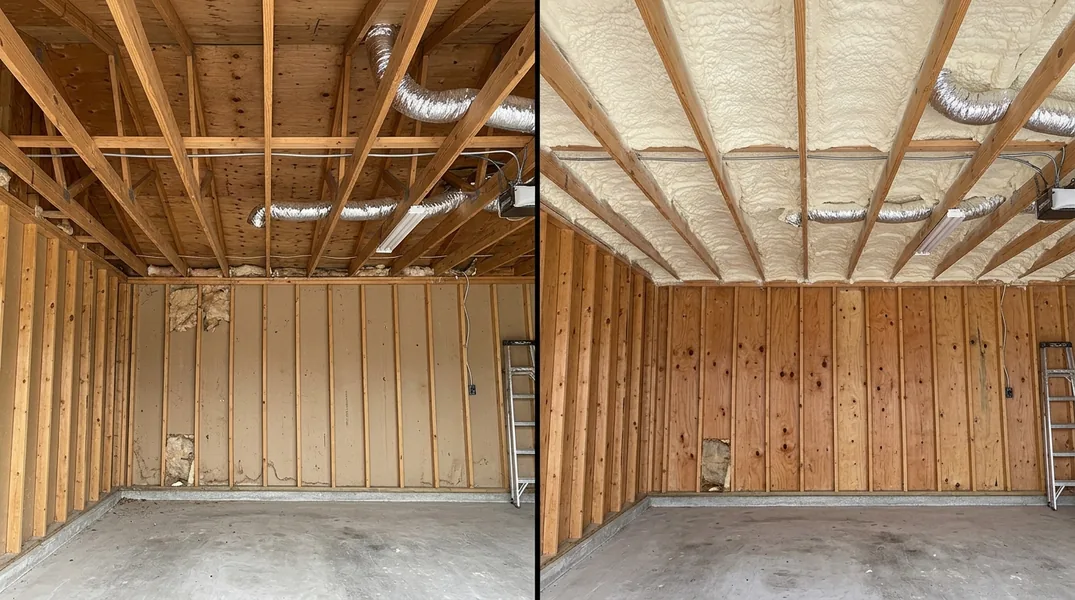
Attic Spray Foam Insulation addresses Brownsville's humidity challenge in two critical ways. First, spray foam is hydrophobic, meaning it doesn't absorb or retain moisture. Whether you choose Closed Cell Spray Foam Insulation or Open Cell Spray Foam Insulation, both types resist water absorption far better than traditional materials. Closed-cell foam is especially effective in humid climates because its dense structure creates an impermeable barrier that prevents moisture from penetrating the insulation. Even if condensation forms on the surface, it beads up and runs off rather than soaking in.
Second, spray foam creates an air seal. When applied properly throughout your attic, spray foam fills every cavity, gap, and penetration, sealing the space completely. This continuous barrier stops humid air from infiltrating in the first place. There are no gaps around electrical boxes, no spaces between joists, no voids around ductwork. The result is a dramatically reduced moisture load entering your attic. Combined with the foam's resistance to water absorption, this creates a protective envelope that maintains insulation performance even in Brownsville's humid environment. Your R-value stays consistent year-round, and your cooling system doesn't have to work overtime to compensate for moisture-degraded insulation.
Crawl Spaces and Pier-and-Beam Foundations: A Related Humidity Battle
While attics get most of the attention, homeowners in Brownsville with pier-and-beam or crawl space foundations face an equally serious moisture challenge. Los Fresnos and surrounding areas have many older homes built on piers, and these foundations are especially vulnerable to humidity. Crawl spaces and the underside of pier-and-beam homes are exposed to ground moisture that wicks upward, combined with the humid air that circulates freely through the open space below. This creates cold floors, higher heating and cooling costs, and an ideal environment for mold and pest problems.
The best insulation for crawl space environments is spray foam, specifically Closed Cell Spray Foam Insulation applied to the rim band, band joists, and underside of the floor system. Crawl space spray foam applications stop the upward wicking of ground moisture and eliminate cold floors by creating a thermal and moisture barrier. Unlike traditional crawl space insulation materials that sag, deteriorate, and fail when exposed to moisture, spray foam remains effective indefinitely. If your home has cold floors or you've noticed moisture problems in the crawl space, professional pier and beam insulation with spray foam can solve the problem at its source.
Energy Savings and Health Benefits in Brownsville's Climate
The humidity control provided by spray foam insulation translates directly into energy savings for Brownsville homeowners. When your attic insulation stays dry and maintains its rated R-value, your air conditioning system doesn't have to compensate for degraded performance. Studies show that homes with proper spray foam insulation in humid climates can reduce cooling costs by 20 to 40 percent compared to homes with traditional insulation. Over the course of a year in South Texas, where air conditioning runs nearly year-round, these savings add up quickly. Many homeowners recoup their insulation investment in just a few years through reduced utility bills.
Beyond energy savings, the humidity control provided by spray foam creates a healthier indoor environment. By preventing moisture accumulation in your attic and crawl spaces, you eliminate the conditions that allow mold and mildew to flourish. Mold spores that become airborne can trigger allergies, asthma, and respiratory problems for family members. The structural integrity of your home is also protected, since wood rot and metal corrosion are prevented when moisture is kept out. These health and structural benefits, combined with lower energy bills, make spray foam insulation an investment in both your comfort and your home's long-term value.
Getting Professional Spray Foam Insulation Near Me: Next Steps
If you're concerned about humidity damage to your attic or crawl space, the first step is a professional assessment. Brownsville Spray Foam Insulation serves the entire Rio Grande Valley with expert installation of spray foam systems tailored to your home's specific needs. Our team understands the unique humidity challenges of the region and can recommend whether Attic Spray Foam Insulation, crawl space foam, or Wall & Injection Foam Insulation is best for your situation. We'll inspect your current insulation, identify moisture problems, and provide a detailed plan to protect your home.
Contact Brownsville Spray Foam Insulation today at (956) 382-6207 or visit our website at https://brownsville-tx-spray-foam.com to request a free estimate. Our team will discuss your concerns, explain the benefits of spray foam in Brownsville's climate, and provide transparent pricing so you can make an informed decision. Don't let humidity damage your insulation and your home's structure. Professional spray foam installation is the proven solution for South Texas homeowners who want lasting protection and lower energy bills.
Looking for a professional spray foam insulation contractor in Brownsville? Brownsville Spray Foam Insulation responds fast for all your spray foam insulation needs.
Get a Free Quote