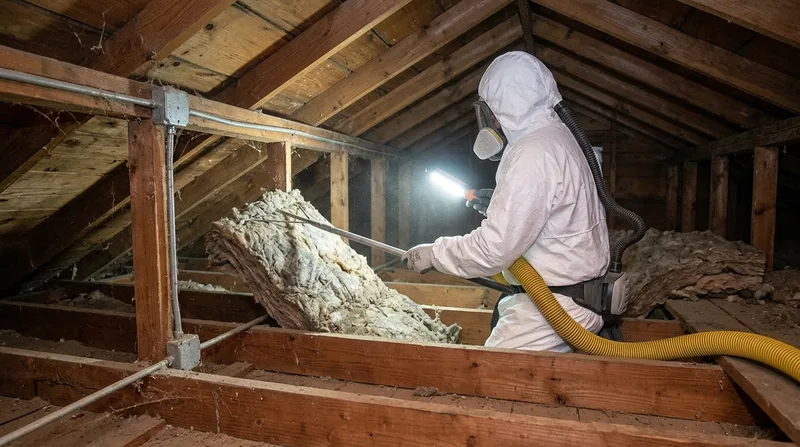




Insulation Removal in Brownsville is the first step in any retrofit or replacement job, and it matters more here than in most places. The Rio Grande Valley's heat and humidity work into attics year-round, turning old fiberglass, cellulose, or mineral wool into a damp, compressed mat that no longer insulates and traps moisture against the roof deck. Before we spray new foam, we remove the failed insulation, inspect the substrate for hidden moisture and damage, and ensure the deck is dry and sound. This is not demolition work, it is precision work that protects your home from the mold and structural problems that follow a careless tearout.
Brownsville sits at the southern tip of the Rio Grande Valley, where nearly every home rests on a slab on grade and older mid-century block and frame homes carry attics that were never designed for today's cooling loads. Newer subdivisions to the north and toward Los Fresnos bring two-story stock with bonus rooms over garages and long duct runs through vented attic space. This is IECC climate zone 2A: hot and humid nearly all year, with hurricane season running June through November and only a brief mild stretch in winter. Humidity never lets up, and moisture drives inward here, so vented attics pull in hot damp air that works against whatever insulation sits at the ceiling line. Energy bills track the length of the cooling season more than anything else, and attic temperature and duct leakage do the most damage. When insulation fails, it fails here not from cold but from relentless moisture.
Why Insulation Removal Matters in Brownsville's Hot, Humid Climate
Old attic insulation in Brownsville homes gets packed down and damp from years of Rio Grande Valley humidity. When fiberglass or cellulose loses its loft, it stops insulating and starts trapping moisture against the roof deck. That moisture feeds mold, rots framing, and ruins ductwork. A proper removal catches these problems before they become expensive structural failures and gives you a clean, dry surface for new spray foam or blown-in insulation.
- We identify moisture damage, roof leaks, and hidden mold before removal starts.
- We haul out old insulation safely without spreading fibers or dust through your living space.
- We inspect the roof deck, joists, and ductwork for rot, rust, or contamination that would ruin new foam.
- We check for rodent nests, droppings, or urine damage that must be addressed before re-insulation.
- We leave the attic clean and ready for whatever comes next, whether spray foam or a simple top-up.
Removal is not optional when old insulation has failed. It is the foundation of any retrofit or upgrade that lasts.
Key info: In Brownsville and surrounding areas, attic insulation that is more than 15 to 20 years old and shows signs of settling, moisture staining, or odor should be removed and inspected by a professional before new foam is applied. The Rio Grande Valley's humidity means failure happens faster here than in drier climates.
For guidance on what your city or county may require before removing attic insulation, visit the Cameron County official website or contact your local building department.
How We Handle Insulation Removal in Brownsville
Our removal process starts with a walk-through to assess what is in the attic, how much there is, and what condition the substrate is in. We bring mechanical ventilation to manage dust and odor, use sealed equipment to contain old insulation, and haul it to a licensed facility. Once the attic is empty and clean, we inspect every square foot of the roof deck and framing for moisture, mold, or structural issues. Only when we confirm the substrate is dry and sound do we move forward with new insulation or attic spray foam insulation.
- We set up mechanical ventilation and containment to keep dust out of your home and ductwork.
- We remove all old insulation, including material in corners, above soffits, and around penetrations.
- We inspect the roof deck, framing, and ductwork for moisture, mold, rust, and rodent damage.
- We identify any roof leaks, ice dam damage, or flashing failures that must be repaired before new insulation goes in.
- We haul all debris to a licensed facility and leave the attic broom-clean and ready for the next phase.
A clean, inspected attic is the only safe foundation for new insulation that will last.
Example: A two-story home in Harlingen with a 1,200-square-foot attic full of settled fiberglass and rodent nests takes one full day to remove, inspect, and prepare. Once we confirm the deck is dry and the framing is sound, the homeowner can move to spray foam retrofit or blown-in insulation with confidence that the new material will perform as designed.
Insulation Removal Methods and Approaches
| Approach | Description | Best for |
|---|---|---|
| Full Attic Removal | Complete tearout of all old insulation, debris, and contaminated material with mechanical ventilation and containment. | Homes with failed, damp, or contaminated insulation before spray foam retrofit or replacement. |
| Partial Removal and Top-Up | Selective removal of settled or damaged areas, inspection of sound insulation, and addition of new material only where needed. | Attics with localized moisture or settling but overall stable insulation that can be supplemented. |
| Crawl Space Clearance | Removal of old batts, blown-in material, or vapor barriers from crawl spaces with full substrate inspection and moisture assessment. | Crawl spaces before closed-cell foam encapsulation or crawl space spray foam insulation. |
| Wall Cavity Clearing (Retrofit) | Removal or displacement of old insulation from exterior walls prior to injection foam retrofit without demolition. | Pre-1980 stock homes in Brownsville and San Benito being retrofitted with wall and injection foam insulation. |
Insulation Removal Cost in Brownsville: What to Expect
Insulation Removal pricing in Brownsville starts at $950 for a typical 1,000 to 1,200 square foot attic, but the final cost depends on several factors. The size and accessibility of your attic, the type and depth of old insulation, whether there is contamination or rodent damage, and the condition of the substrate all affect the scope of work. An attic that is damp and moldy takes longer than a dry one. A space packed with settled cellulose costs more to remove than loose fiberglass. Access matters too: if your attic entrance is tight or your home is in a dense neighborhood like downtown Brownsville where roof access is difficult, the job will cost more.
We always recommend getting 2 to 3 estimates before committing to removal. A written estimate should itemize what is being removed, what inspection will be done, how debris will be handled, and what the total cost is. If an estimate is vague on scope or missing detail on what happens after removal, ask questions or get another quote. Visit our pricing page for more detail on what drives cost across all our services.
The cheapest removal is not always the best. Cutting corners on inspection or containment can leave you with mold in the ducts, fibers in the living space, or a substrate so wet that new foam fails. The right cost is one that includes proper ventilation, a thorough inspection, safe hauling, and a clean, dry attic ready for the next step.
What to Look for When Hiring an Insulation Removal Contractor Near Brownsville
Hiring the right contractor for insulation removal near me or near Brownsville means asking the right questions before you sign. Every contractor should be fully insured and carry liability coverage that protects your home and their crew. Ask to see proof of insurance and verify that it is current. Get a written estimate that names what is being removed, how the work will be done, what inspection happens after, and the total cost. A professional will explain how they manage dust and odor, where old insulation goes, and what happens if they find mold or moisture damage during the tearout.
Contractor registration in Texas is set at the municipal level, not the state. Brownsville, Harlingen, San Benito, and other cities in the Rio Grande Valley may require any contractor to register before performing work or pulling a permit. Before you hire, ask your contractor what registration your city or county requires and ask them to show you that they hold it. Do not assume it is not necessary just because you do not hear about it. Ask for references from other homes in the area where they have done removal and re-insulation work, and call at least two of them.
Avoid any contractor who promises a price before seeing the attic, who cannot explain the inspection process, or who says they can start and finish in a few hours. Proper removal takes time. Avoid anyone who offers to spray new foam immediately after removal without letting the attic dry and be inspected. And be skeptical of any contractor who cannot be reached after the job is done or who will not put the scope and price in writing. For a free, no-obligation estimate on insulation removal in Brownsville or the surrounding area, contact us today at (956) 382-6207.
Insulation Removal in Brownsville: Pricing Guide
| Service | Price | Details |
|---|---|---|
| Typical attic removal (1,000-1,200 sq ft) | Starting at $950 | Full tearout of old insulation, mechanical ventilation, inspection of roof deck and framing for moisture or damage |
| Large attic (1,500+ sq ft) or contaminated space | Starting at $1,400 | Increased scope for size, rodent damage, mold, or heavy settling that requires extended labor and careful containment |
| Crawl space removal and inspection | Starting at $800 | Removal of old batts or blown-in material, moisture assessment, and substrate evaluation before encapsulation or foam |
| Wall cavity clearing (retrofit prep) | Starting at $600 | Selective removal or displacement of old insulation from exterior walls prior to injection foam, per wall section |
| Travel and estimate | Included / Free | No separate mileage fee within Brownsville and surrounding areas; free estimate with response within 24 hours |
Indicative pricing, the exact cost depends on square footage, finish, and site access. Free personalized estimate within 24h at (956) 382-6207.


