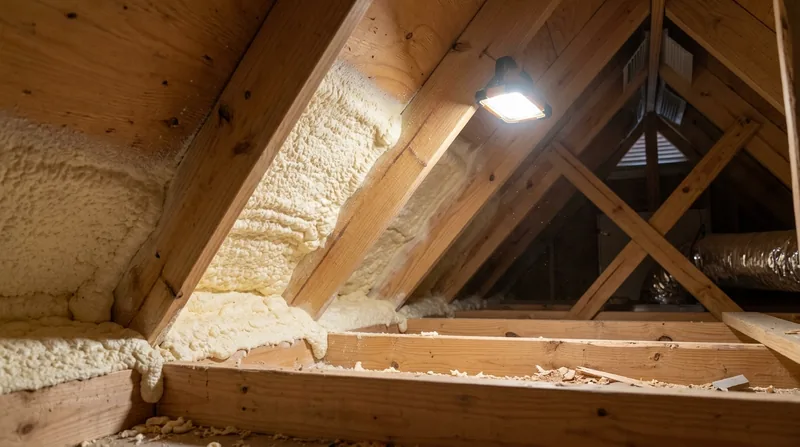




Open Cell Spray Foam Insulation in Brownsville fills attic cavities and interior walls in climate zone 2A, where hot, humid air works relentlessly against older frame homes near downtown and newer two-story builds pushing toward Los Fresnos. Brownsville sits on a slab on grade with nearly every home carrying either a neglected mid-century attic or bonus-room framing over a vented attic space, and both pull in damp exterior air that defeats fiberglass batts and blown-in fiber. Open cell foam expands to seal air leaks around top plates, electrical penetrations, and ductwork, cutting the load on your cooling system during the long season that runs May through October. Unlike closed cell foam, open cell is lower density, more affordable, and breathes slightly, making it the right choice for sound dampening and for attics where moisture control is built into the roof deck venting strategy. We have served Brownsville since 2012 with written estimates that specify R-value and thickness, mechanical ventilation during cure, and a realistic re-entry window. Call (956) 382-6207 for a free estimate, or learn more about our attic spray foam insulation service to see how we approach the jobs that matter most in the Rio Grande Valley.
Why Open Cell Spray Foam Insulation Matters in Brownsville's Hot, Humid Climate
Brownsville's cooling season runs nine months of the year, and vented attics pull in outside humidity that fiberglass and cellulose cannot stop. Your ductwork runs through that hot, moist air, losing conditioned air through leaks and losing efficiency to the temperature delta between the duct and the attic around it. Open cell foam seals those leaks and fills the cavities, cutting air exchange and reducing the work your air conditioning system has to do. The cost benefit here is direct: lower energy use during the months when cooling dominates your utility bill.
- Open cell foam expands to fill gaps around electrical outlets, plumbing penetrations, and top plates that fiberglass misses entirely.
- It reduces infiltration of hot, humid outside air into the attic space, lowering the temperature around your ductwork and the ceiling below.
- Open cell is breathable, meaning moisture that enters the foam can dry back out, preventing trapped water that would rot framing or degrade the foam over time.
- The lower density and lower cost make it the right choice for attics where the primary goal is air sealing and thermal resistance, not vapor barrier control.
- It dampens sound from roof traffic and weather, a benefit older frame homes in central Brownsville appreciate when bonus rooms sit beneath uninsulated attic space.
These factors combine to make open cell the go-to insulation for Brownsville attics that need a real air seal without the premium price tag of closed cell foam.
Key info: Brownsville's humidity never drops below 60 percent even in winter, and vented attics pull that moisture inward. Open cell foam breathes, allowing trapped moisture to dry back out, which is why it outperforms closed cell in this climate for sound-dampening and air-sealing jobs where the roof deck is already vented correctly.
For more on how spray foam works in high-humidity climates, see our guide to closed cell spray foam insulation, which handles moisture differently and serves metal buildings and sealed roof decks where condensation control is the primary goal.
How We Install Open Cell Spray Foam Insulation in Brownsville Attics and Walls
Our process begins with a site visit to assess the attic or wall cavity, check for existing insulation that needs removal, and confirm that the substrate is dry and ready to receive foam. We set up mechanical ventilation to manage VOCs during and after application, protecting your family and the crew. We spray open cell foam to the specified thickness in multiple thin passes, allowing each layer to expand fully before the next application, and we confirm the density and R-value as we work. Once cured, we install thermal and ignition barriers as required by code at your address, and we provide written documentation of what was installed and where.
- We perform a detailed inspection and take measurements to calculate board feet and confirm R-value targets before any spray begins.
- We remove any failed insulation, debris, or contaminated material and dispose of it off-site according to local regulations.
- We seal air leaks around electrical boxes, plumbing stacks, and ductwork penetrations before applying the foam, maximizing the effectiveness of the seal.
- We spray open cell foam in thin, controlled passes at the correct drum temperature and pressure ratio, ensuring proper expansion and density.
- We maintain mechanical ventilation throughout the cure period and communicate a realistic re-entry window, typically 24 to 48 hours, before the space is occupied.
- We install thermal and ignition barriers as specified by the building code in force at your address, and we defer to the local building department on all regulatory requirements.
The result is a sealed attic or wall cavity with consistent R-value, no voids, and air leakage reduced to near zero. We also offer air sealing services to address rim joists, band joists, and other penetrations that fiberglass and blown-in insulation cannot reach.
Example: A mid-century frame home near downtown Brownsville with a 1,200-square-foot attic and R-19 fiberglass batts installed in 1985 typically loses 30 to 40 percent of its cooled air through leaks at the top plates and around ductwork. Open cell foam at R-3.6 per inch, sprayed to 5.5 inches, delivers R-20 in the same space, seals every leak, and cuts attic air infiltration by 85 to 95 percent. The payback in cooling cost reduction typically arrives within 3 to 5 years in the Rio Grande Valley.
Open Cell Spray Foam Insulation Methods and Applications
| Approach | Description | Best for |
|---|---|---|
| Attic Cavity Fill | Open cell foam sprayed between rafters or trusses to the full depth of the framing member, creating a monolithic air barrier at the roof deck. | Vented attics in Brownsville and Los Fresnos where the goal is air sealing, sound dampening, and thermal resistance without moisture control. |
| Wall Injection (Retrofit) | Open cell foam injected into closed wall cavities through small access holes, expanding to fill voids and seal air leaks without demolition. | Pre-1980 frame homes with block or brick exterior and empty wall cavities, common in central Brownsville and Harlingen. |
| Rim and Band Joist Sealing | Open cell foam applied to the rim joist and band joist area where the foundation meets the first-floor framing, sealing a major air leak path. | Slab-on-grade homes throughout the Brownsville area where infiltration at the rim joist contributes to cooling load and humidity control issues. |
| Garage Cavity Fill | Open cell foam sprayed into garage ceiling or wall cavities to reduce heat transfer and air leakage between the garage and the conditioned house. | Two-story homes with bonus rooms over garages, particularly new subdivisions north of Brownsville toward Los Fresnos. |
| Crawl Space Insulation | Open cell foam applied to the underside of the floor framing in crawl spaces, creating a thermal and air barrier between the conditioned space and the unconditioned area below. | Older homes with vented crawl spaces or new construction where the crawl space is not fully encapsulated and conditioned. |
Each application method is chosen based on your home's framing, the existing insulation condition, and the building code requirements at your address. We assess the site, confirm what's required by the local building department, and recommend the approach that delivers the best R-value and air seal for your budget.
Open Cell Spray Foam Insulation Cost in Brownsville: What to Expect
Open cell spray foam typically costs starting at $0.55 per board foot, with most Brownsville attic jobs ranging from $0.55 to $0.75 per board foot depending on access, the volume of existing insulation to remove, and the thickness required to meet your R-value target. A 1,200-square-foot attic sprayed to R-20 typically requires 5.5 to 6 inches of open cell foam, which translates to roughly 5,500 to 6,000 board feet and a total cost in the range of $3,000 to $4,500 before any removal or disposal fees. Injection foam into closed walls costs more per board foot because of the labor required to drill access holes, fill the cavity carefully, and patch afterward, so wall retrofit jobs typically run $1.00 to $1.50 per board foot. Rim joist and band joist sealing is smaller in scope and often runs $800 to $1,500 for a typical slab-on-grade home in Brownsville.
Factors that affect your final cost include the volume of existing insulation that needs removal and disposal, the accessibility of the space (tight attics cost more than open attics), the presence of obstacles like ductwork or electrical panels, and whether thermal and ignition barriers are required by code at your address. We provide written estimates with R-value and thickness specifications, so you know exactly what you are paying for and what the finished installation will deliver. We recommend getting 2 to 3 estimates from local contractors and comparing not just price but the detail in the estimate: if an estimate has no R-value, no thickness, no mention of removal, and no explanation of what happens during cure, that is a red flag. For a detailed breakdown of pricing across all our services, see our full pricing guide.
Open Cell Spray Foam Insulation Near Me: What Brownsville Homeowners Should Know Before Hiring
When you are ready to hire a spray foam insulation contractor, verify that they are fully insured and ask to see a current certificate of insurance before any work begins. Contractor registration and licensing vary by city across Greater Brownsville, with no reciprocity between municipalities, so ask any contractor whether your city or county requires registration before they perform work and whether they hold it. Check references from recent jobs in your neighborhood, ask about their experience with open cell versus closed cell foam, and confirm that they understand the difference between attic venting strategies and when each type of foam is the right choice. If your home is in an HOA community, check the architectural guidelines for any restrictions on exterior work or crawl space access, though HOA rules rarely touch insulation itself. For jobs near protected trees or in heritage areas, confirm permit requirements with your local building department before you book.
- Ask any contractor for a detailed written estimate that includes R-value, thickness in inches, the square footage or board feet to be sprayed, and the total cost with no surprises after the job starts.
- Verify that the contractor maintains mechanical ventilation during application and cure, and confirm the re-entry window in writing before you schedule the work.
- Request references from at least two jobs completed in the past 12 months in Brownsville, Harlingen, or Los Fresnos, and call them to ask about the quality of the installation and the contractor's responsiveness after the job.
- Confirm that the contractor is fully insured and ask to see the certificate of insurance naming your address as the job site, protecting you if an injury or property damage occurs during the work.
- Ask about the contractor's process for handling existing insulation removal, where the material is disposed of, and whether disposal costs are included in the estimate or billed separately.
- Check with your local building department about permit requirements for your address, and confirm that the contractor will help you navigate what applies and assist with any paperwork before work begins.
The strongest indicator of a credible contractor is a detailed estimate, references you can verify, and willingness to answer technical questions about the foam itself, the application process, and the re-entry window. We are ready to provide a free estimate with no obligation, and we are happy to answer questions about how open cell foam compares to closed cell or blown-in insulation for your specific situation. Call (956) 382-6207 to schedule your site visit.
Open Cell Spray Foam Insulation in Brownsville: Pricing Guide
| Service | Price | Details |
|---|---|---|
| Open Cell Spray Foam Attic Fill | Starting at $0.55/board ft | Includes foam, application labor, mechanical ventilation during cure, and thermal barrier installation per code |
| Wall Injection Retrofit | Starting at $1.00/board ft | Includes drilling access holes, injecting foam into closed cavities, and patching holes; labor-intensive due to precision required |
| Rim and Band Joist Sealing | Starting at $800 | Typical slab-on-grade home in Brownsville; covers foam, application, and thermal barrier at the foundation rim joist area |
| Insulation Removal and Disposal | Additional cost | Varies by volume and type of existing insulation; assessed on site and quoted separately or bundled into total project cost |
| Written Estimate | Free | Includes R-value and thickness specifications, board feet calculation, and detailed scope; response within 24 hours at (956) 382-6207 |
Indicative pricing, the exact cost depends on square footage, finish, and site access. Free personalized estimate within 24h at (956) 382-6207.


