Understanding Slab on Grade Construction in Brownsville
If you own a home in Brownsville, there's a good chance you're living in a slab on grade home. This construction style, where the concrete foundation sits directly on the ground without a basement or crawl space, is extremely common in South Texas due to the flat terrain and warm climate. While slab on grade construction offers cost savings during building and works well in our region's climate, it presents unique insulation challenges that many homeowners don't fully understand.
The primary issue with slab on grade homes is thermal bridging at the foundation perimeter. Heat transfers directly from your home's interior to the ground and outside air through the concrete slab edge and foundation walls. In Brownsville, where cooling costs dominate your energy bills for much of the year, this thermal loss can significantly impact your monthly utility expenses. Unlike homes with basements or crawl spaces, you can't simply add insulation below the living space, which means your insulation strategy must focus on the attic and walls to compensate.
Why Your Attic Matters More in Slab on Grade Homes
In a slab on grade home, the attic becomes your primary defense against heat gain and loss. Because there's no basement or crawl space to insulate, approximately 85 percent of unwanted heat transfer happens through your roof and attic space. During Brownsville's long, hot summers, the sun beats down on your roof, and without proper attic insulation, that heat radiates directly into your living spaces below. This is why Attic Spray Foam Insulation has become increasingly popular for homeowners in our area who want to maximize their cooling efficiency.
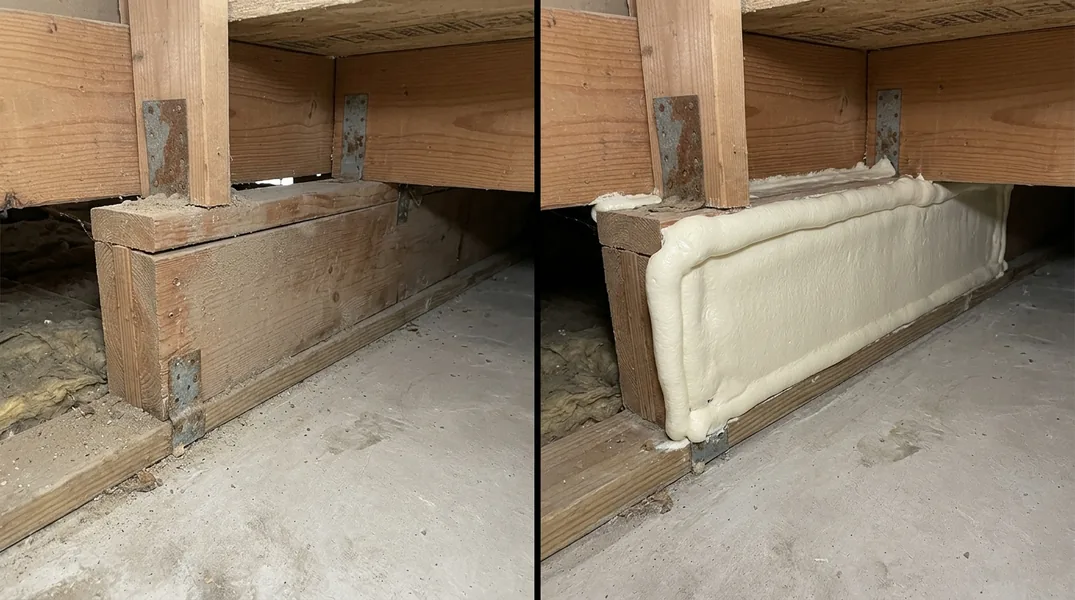
Traditional fiberglass batts and blown-in insulation work, but they have limitations. They settle over time, develop gaps around obstacles like pipes and electrical wiring, and don't seal air leaks. Spray foam insulation, by contrast, expands to fill every cavity and creates an air-tight seal that prevents conditioned air from escaping. For slab on grade homes, this air sealing capability is crucial because even small gaps in traditional insulation can allow significant air leakage, undermining your entire cooling strategy.
Insulation Removal and the Cost Factor
Before you can install new spray foam insulation, you may need to address what's already in your attic. Many older homes in Brownsville still have outdated insulation materials that have degraded over decades. Attic insulation removal is a critical first step if your current insulation contains vermiculite, asbestos-containing materials, or if it's simply too compressed and ineffective to warrant keeping. Old insulation removal costs vary based on your attic's size, the type of material present, and accessibility, but it's an investment that shouldn't be skipped.
The insulation removal cost typically ranges from $1 to $2 per square foot for basic blown-in material removal, though vermiculite insulation removal may cost more due to special handling requirements. While this seems like an additional expense, removing old, inefficient insulation before installing spray foam ensures your new system performs optimally. You're not paying twice; you're ensuring that your new insulation investment actually delivers the energy savings you expect. Many homeowners find that the energy bill reductions they achieve with new spray foam insulation offset the removal costs within just a few years.
Closed Cell vs. Open Cell Spray Foam for Brownsville Climates
Closed Cell Spray Foam Insulation and Open Cell Spray Foam Insulation serve different purposes, and choosing between them depends on your specific needs and budget. Closed cell foam has a higher R-value per inch (roughly 6.5 to 7.0 R-value per inch), making it ideal for maximizing insulation in tight spaces. It's also more moisture-resistant, which matters in our humid South Texas climate where occasional moisture intrusion can occur. Closed cell foam is denser, more durable, and provides superior air sealing, making it the premium choice for attic applications in slab on grade homes.
Open cell foam, while less expensive, offers an R-value of about 3.6 per inch and is more permeable to moisture vapor. In attics, open cell foam can work if your ventilation is excellent, but Brownsville's humidity levels mean that closed cell is often the better choice for long-term performance. The slightly higher initial cost of closed cell spray foam pays dividends through improved energy efficiency, better moisture management, and longer-lasting performance in our climate. When you're upgrading your attic insulation in a slab on grade home, closed cell foam typically delivers the best return on investment.
Wall and Injection Foam Solutions for Slab on Grade Homes
While attic insulation is crucial for slab on grade homes, your exterior walls also play an important role in thermal performance. If your home has hollow wall cavities and you're not ready for a full exterior renovation, Wall & Injection Foam Insulation offers a non-invasive solution to improve wall insulation without tearing into drywall. This technique involves drilling small holes in your exterior walls and injecting foam insulation directly into the cavities. It's particularly effective for older homes that were built with little to no wall insulation.
Injection foam works especially well in slab on grade homes because it addresses thermal bridging through the exterior walls, which becomes more significant when you don't have a basement or crawl space to buffer temperature extremes. The foam expands to fill cavities completely, eliminating air pockets and creating a continuous thermal barrier. Combined with upgraded attic insulation, wall injection foam can meaningfully reduce your cooling load during Brownsville's hot months and improve comfort year-round.
Planning Your Spray Foam Insulation Project in Brownsville
If you're ready to improve your slab on grade home's energy efficiency, the first step is a professional attic inspection and energy audit. This assessment will identify where heat loss is occurring, what insulation removal may be necessary, and which spray foam solution makes sense for your specific home. Brownsville Spray Foam Insulation offers comprehensive evaluations that take into account your home's age, current insulation condition, budget, and long-term energy goals. Understanding your home's unique needs ensures you're not overspending on unnecessary upgrades or under-investing in critical areas.
Once you've decided to move forward, your contractor will discuss pricing options and create a timeline for your project. Most attic spray foam jobs can be completed in one to two days, with minimal disruption to your home. After installation, you'll notice improved comfort, more consistent temperatures throughout your home, and lower energy bills. For homeowners in Brownsville with slab on grade homes, spray foam insulation isn't a luxury upgrade; it's a practical investment in your home's efficiency and your family's comfort. Contact Brownsville Spray Foam Insulation today at (956) 382-6207 to schedule your free estimate and learn exactly what your project will cost.
Looking for a professional spray foam insulation contractor in Brownsville? Brownsville Spray Foam Insulation responds fast for all your spray foam insulation needs.
Get a Free Quote