Understanding R-Value Requirements and Spray Foam Insulation R Value Per Inch
When homeowners in Brownsville think about upgrading their insulation, the first question is often about R-value. R-value measures thermal resistance, or how well a material slows heat transfer. The higher the R-value, the better the insulation performs. However, understanding what R-value you actually need requires looking at both local climate conditions and building code requirements.
Spray foam insulation offers impressive performance per inch. Closed Cell Spray Foam Insulation typically delivers R-6 to R-7 per inch, while Open Cell Spray Foam Insulation provides R-3.5 to R-3.6 per inch. This efficiency matters because it means you need less material thickness to achieve your target R-value compared to traditional fiberglass batts or blown-in cellulose. For a homeowner deciding between a full spray foam job and targeted air sealing, understanding these numbers helps clarify what you're actually paying for and whether you need the full treatment.
R Value Requirements By State: What Does Texas Require?
Texas doesn't have a single statewide R-value mandate for residential attics, but the International Energy Conservation Code (IECC), which Texas has adopted in many jurisdictions, recommends specific minimums based on climate zones. Brownsville falls into a warm climate zone, which typically recommends R-30 to R-38 for attic insulation. This is considerably lower than requirements in northern states, where R-49 to R-60 is common.
For many homeowners in the Rio Grande Valley, achieving R-30 to R-38 is realistic without necessarily needing a full spray foam application. If your attic already has some existing insulation, you might only need to supplement with air sealing and additional material in specific areas. This is where the decision between full Attic Spray Foam Insulation and targeted air sealing becomes practical. A professional energy audit can determine exactly what your home currently has and what gaps exist.
Air Sealing Alone: When It's Enough for Your Brownsville Home
Air sealing is the process of identifying and closing gaps, cracks, and leaks in your attic and building envelope. These openings allow conditioned air to escape and outdoor air to infiltrate, undermining even the best insulation. In many cases, homeowners waste money on additional insulation when what they really need is proper air sealing. If your attic already meets or exceeds the R-value requirement for Brownsville, air sealing alone might be your best investment.
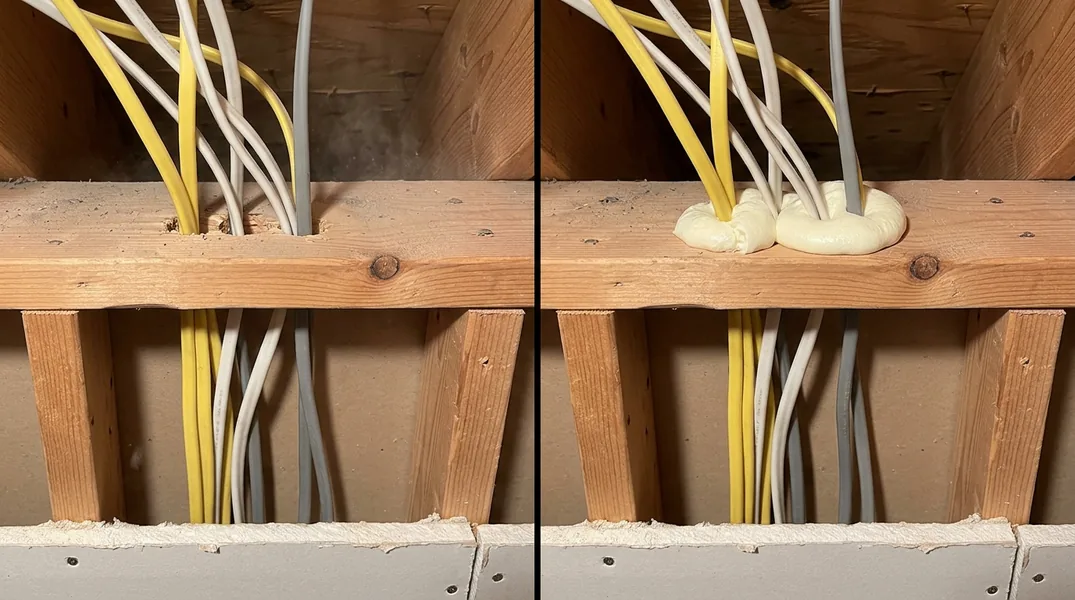
Air sealing typically involves sealing around electrical penetrations, HVAC ducts, plumbing vents, and gaps where walls meet the attic floor. Contractors use caulk, weatherstripping, and foam sealants to close these passages. The advantage is cost: air sealing is significantly less expensive than a full spray foam application. If your existing insulation is already adequate but you suspect energy loss from air leaks, this targeted approach can improve comfort and lower utility bills without the expense of a complete insulation overhaul. Many homeowners find that addressing air leaks first gives them the best return on investment.
How Thick Should Spray Foam Be: Full Coverage vs. Strategic Application
The question of thickness depends entirely on your goals and current situation. How thick should spray foam be? The answer varies. If you're doing a full spray foam job to achieve R-50 or higher, you might need 7 to 8 inches of closed cell foam or 10 to 12 inches of open cell foam. However, if your attic already has existing insulation and you're simply looking to improve air sealing and boost R-value incrementally, you might only apply 2 to 3 inches in strategic locations.
Many homeowners don't realize they have a middle-ground option. Instead of spraying the entire attic floor, you could apply spray foam in high-priority areas: around penetrations, in rim joists, along band boards, and in any sections where air movement is visible or suspected. This hybrid approach combines the benefits of spray foam's superior air-sealing properties with the cost efficiency of a partial application. When you contact Brownsville Spray Foam Insulation at (956) 382-6207, our team can evaluate your specific attic and recommend whether full coverage or strategic application makes more sense for your budget and goals.
Rebates: Maximizing Your Investment
The federal insulation tax credit ended on December 31, 2025, so ask your utility company about any current rebates instead.
Many utility companies in Texas offer insulation rebates to encourage energy-efficient upgrades. These rebates can cover a portion of your material and labor costs. The key is verifying eligibility before you begin work. When you request a free estimate from Brownsville Spray Foam Insulation, ask about current and rebate programs. Our team stays current on available incentives and can help you understand what you might qualify for. Combined with the long-term energy savings from better insulation and air sealing, these incentives make upgrading your attic more affordable than many homeowners realize.
Attic Spray Foam Insulation Cost in Brownsville: What to Budget
Understanding pricing for insulation work helps you make an informed decision. Full Attic Spray Foam Insulation typically costs between $1.50 and $3.00 per board foot, depending on whether you choose open cell or closed cell foam and the complexity of your attic layout. For a typical 1,500-square-foot attic, a full spray foam job might range from $3,000 to $8,000 or more. Air sealing alone, by contrast, usually costs between $500 and $2,000, depending on how many penetrations need attention.
The real question isn't which option is cheapest, but which offers the best value for your specific situation. If your attic insulation is already adequate and you're primarily losing energy through air leaks, air sealing delivers faster payback. If your attic is poorly insulated or you want maximum energy efficiency and air-sealing benefits combined, full spray foam justifies the higher investment. The team at Brownsville Spray Foam Insulation can provide a detailed estimate after assessing your attic. We recommend getting multiple quotes and asking each contractor about rebates applicable to your project. Call (956) 382-6207 or visit our website to schedule a free estimate and learn which approach makes sense for your home and budget.
Looking for a professional spray foam insulation contractor in Brownsville? Brownsville Spray Foam Insulation responds fast for all your spray foam insulation needs.
Get a Free Quote